






009. When the Climate Turns Cruel – Women & Children Bear the Brunt 🌡️
Environment, Gender, Vulnerable Populations, Health & Development
By IAS Monk / April 2, 2025
The Union Ministry of Women and Child Development has released a landmark report:
“How Does Climate Change Impact Women and Children Across Agroecological Zones”.
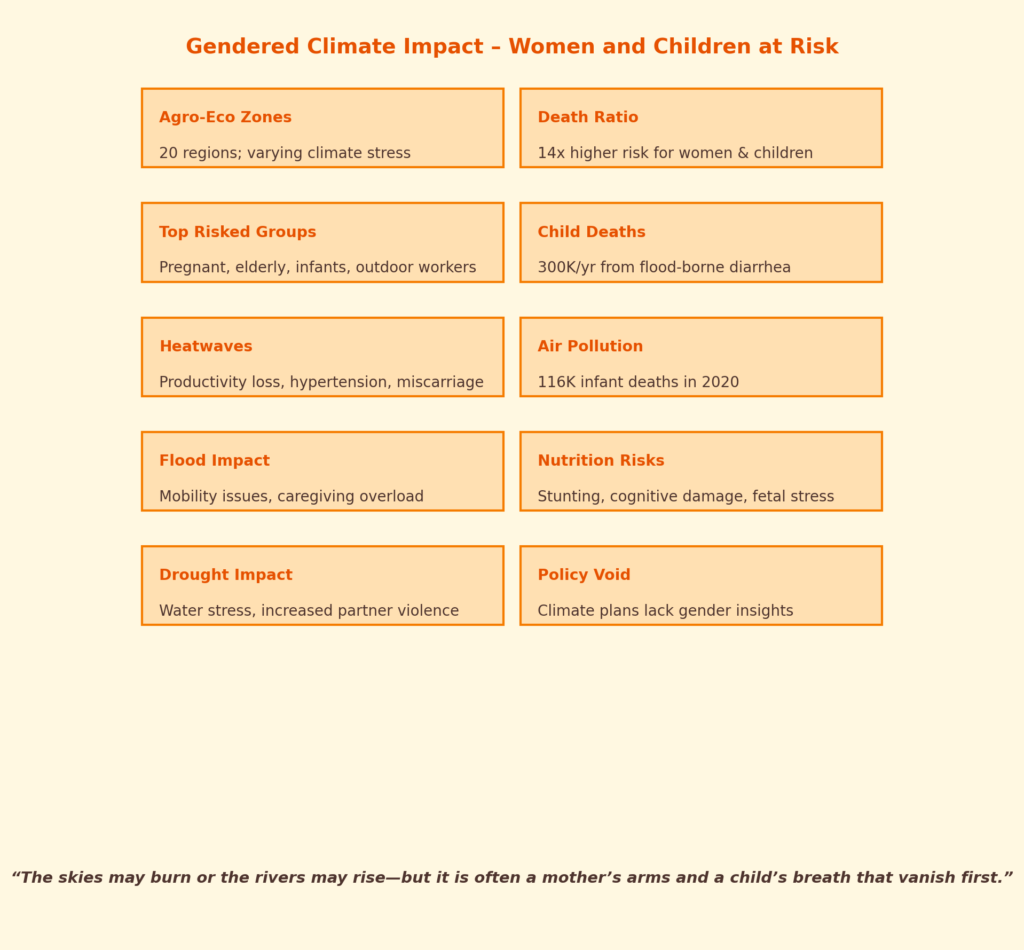
The answer, heartbreakingly, is clear: women and children are up to 14 times more likely to die during climate disasters—not due to weakness, but due to invisibility in preparation and response.
🌾 India’s Diverse Climate Landscape
- 20 Agro-Ecological Zones → varying exposure
- States like Maharashtra, Gujarat, Jharkhand span multiple agro-zones
- Regions like NE Hills & Western Coasts span many states → require interstate coordination
👩🌾 How Climate Change Affects Women
- Heatwaves: 30x increase → elderly, pregnant women, & outdoor workers most at risk
- Indoor Heat Exposure: Urban heat islands + no cooling for older women
- Workforce Impact: Women in fields & kilns show reduced output + heart strain
- Violence: Post-disaster spikes in domestic/sexual violence
- Floods & Droughts: Mobility issues, water strain, caregiving, and higher risk of IPV
- Pregnancy: Heat linked to hypertension, bleeding, fetal risk
- Air Pollution: Triggers osteoporosis, heart disease, and risks in gestation
- Livelihoods: Women sustain agro-forest-coastal economies but face resource depletion
🧒 Children – Small Bodies, High Risks
- 14x more likely to die in disasters
- Children <5: most vulnerable to floods, malnutrition, & infection
- Major Disasters (2000–16): 17,671 child deaths
- Diarrhea: 300,000 child deaths/year in India → linked to flood-contaminated water
- Air Pollution:
➤ 116,000 infant deaths (2020)
➤ Affects brain growth, stunting, immunity - Nutrition:
➤ Climate change reverses malnutrition gains
➤ Fetal Origins Hypothesis: Poor prenatal nutrition = lifelong risk
⚠️ Policy Gap – Where is Gender?
- Most climate plans ignore gender-specific data
- No robust disaster strategy tailored for women’s health, mobility, or caregiving role
- Children’s exposure is under-mapped in rural policy
📚 Relevance for UPSC
- GS1: Women & Children, Geography
- GS2: Vulnerable Groups, Health Policy
- GS3: Disaster Management, Environmental Governance
- Essay: “The climate crisis is also a crisis of care.”
✨ Closing Whisper
“The skies may burn or the rivers may rise—but it is often a mother’s arms and a child’s breath that vanish first.”
🔥 A Thought Spark – by IAS Monk
We speak of climate as carbon, but forget it is also a woman’s worry in a droughted field.
It is a girl married early because the crops failed.
It is a child coughing not from cold, but from poisoned air.
Until the climate response hears their story, it is not a solution—it is only a strategy.