


📘 Q.7 IAS Prelims 2023 — Economics (Investment & Capital Formation)
🧷 Authentic Classroom Explanation by IAS Monk
📌 The Question:
Consider the investments in the following assets:
1. Brand recognition
2. Inventory
3. Intellectual property
4. Mailing list of clients
How many of the above are considered intangible investments?
(a) Only one
(b) Only two
(c) Only three
(d) All four
✅ Correct Answer: (c)
🧠 Curiosity Raiser
Why do companies like Google, Apple, or Infosys derive most of their value from things you cannot touch?
👉 Because modern economies run more on ideas, trust, and data than on machines alone.
📘 Enrichment Notes (UPSC Value Addition)
🔹 What are Intangible Investments?
An intangible asset is:
- Non-monetary
- Without physical substance
- Capable of generating future economic benefits
Examples include:
- Brand value
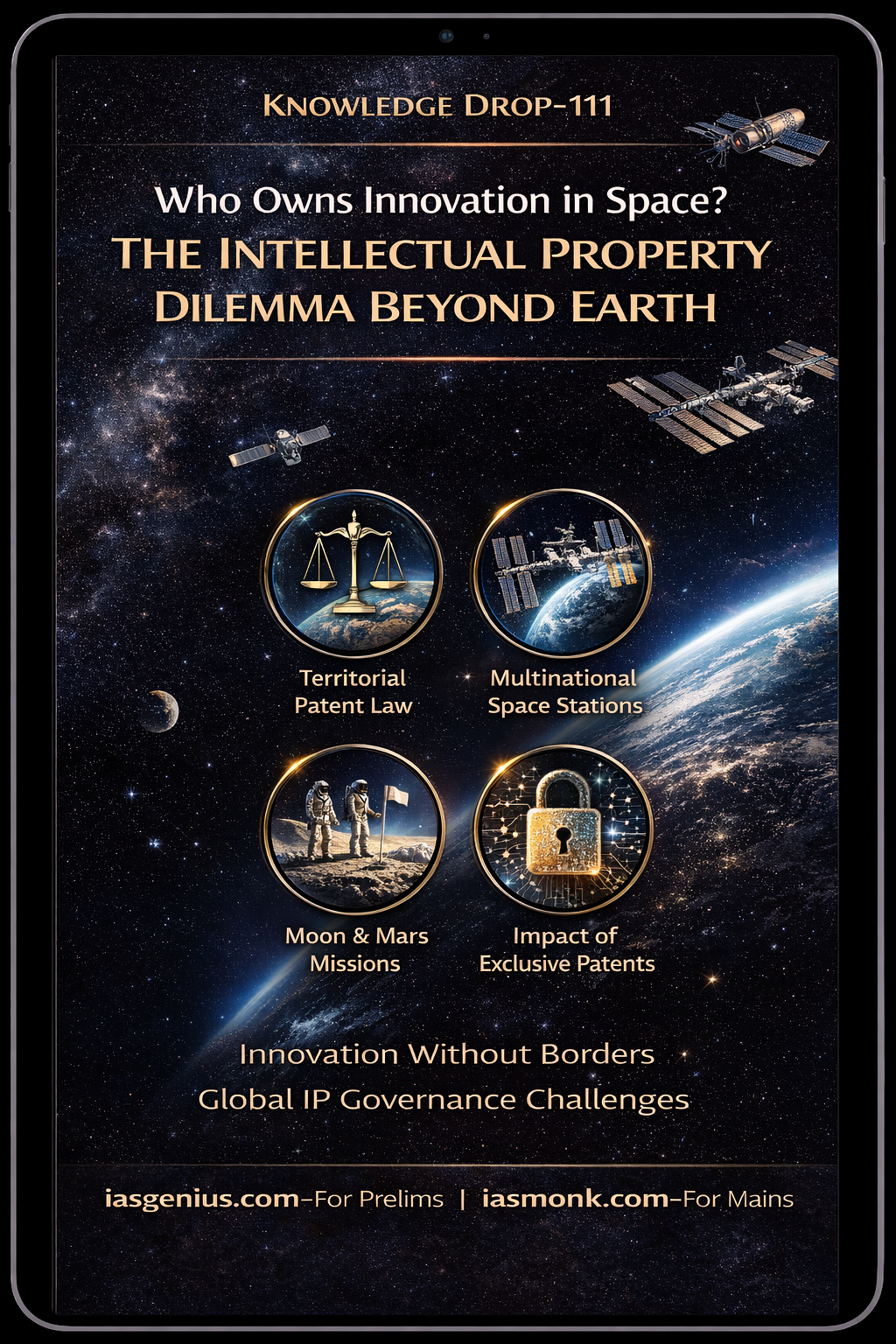
- Intellectual property
- Customer relationships
- Market knowledge
- Software, patents, copyrights
🔍 Statement-wise Analysis
✔️ 1. Brand recognition — Intangible ✅
Brand value reflects consumer trust, loyalty, and perception.
It has no physical form but directly impacts pricing power and sales.
❌ 2. Inventory — NOT intangible
Inventory consists of physical goods held for sale or production.
It is a tangible current asset, not an intangible investment.
✔️ 3. Intellectual property — Intangible ✅
Includes:
- Patents
- Copyrights
- Trademarks
- Designs
These are classic examples of intangible capital.
✔️ 4. Mailing list of clients — Intangible ✅
Customer lists represent:
- Market access
- Future revenue potential
- Relationship capital
Explicitly recognised as intangible assets in accounting and economics.
🧩 Quick Elimination Trick (Prelims Hack)
If you can store it in a warehouse → Tangible
If it lives in law, data, mind, or reputation → Intangible
🧠 Concept Lock
✔️ Brand recognition
❌ Inventory
✔️ Intellectual property
✔️ Mailing list
👉 3 intangibles → Option (c)
🧘♂️ IAS Monk Whisper
In the 21st-century economy,
what you own matters less than what you are known for.